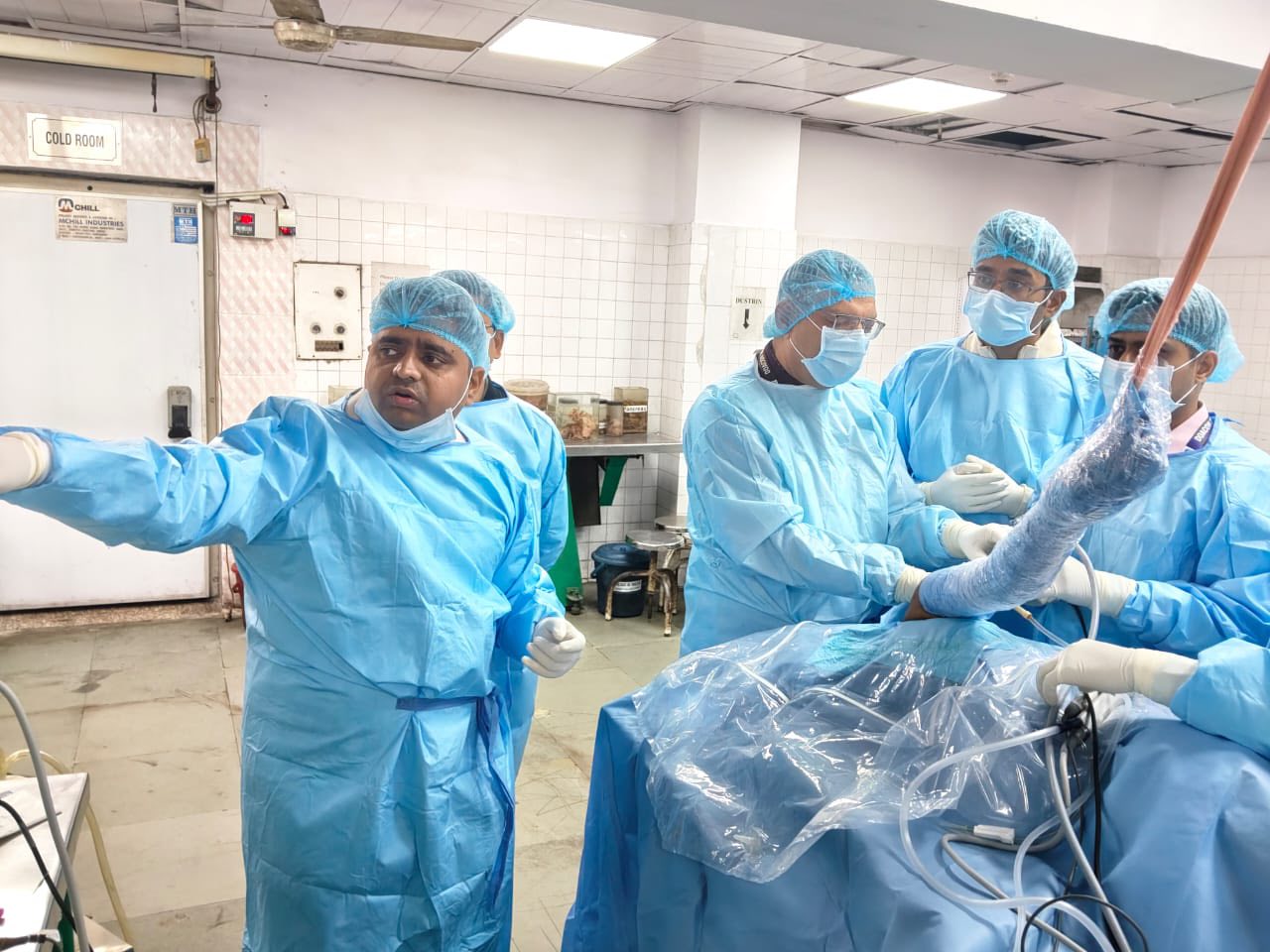
An initial joint consultation is a rigorous diagnostic audit of your joint mechanics, pain levels, and structural integrity. This comprehensive evaluation is designed to precisely plan surgical interventions or prevent unnecessary procedures entirely. Under the expert guidance of Dr. Rohit Pandey, your visit involves clinical intake, biomechanical testing, and advanced imaging review. Finding the right specialist dictates your long-term mobility.
By consulting a top-tier knee replacement surgeon in Varanasi , you ensure your assessment is rooted in evidence-based orthopedics. We focus strictly on identifying the exact anatomical source of joint dysfunction, analyzing cartilage wear, and establishing functional limitations.
Clinical History and Lifestyle Assessment
Your consultation begins with a detailed forensic analysis of joint pain. Medical history goes beyond identifying an aching joint; it establishes the timeline of mechanical failure. We systematically evaluate pain triggers, sleep disruption patterns, and functional limitations.
To accurately diagnose your structural deficits, your doctor will map out:
- Onset and duration: Pinpointing exactly when mobility restrictions began and how rapidly symptoms progress.
- Previous trauma: Assessing past fractures, ligament tears, or surgical interventions altering joint alignment.
- Activity-induced flare-ups: Tracking pain spikes associated with stairs, prolonged standing, or athletic exertion.
Whether you present with age-related degenerative osteoarthritis or require the specialized expertise of a sports injury surgeon in Varanasi, this clinical intake establishes your baseline. Accurate historical data directly informs subsequent physical stress tests and dictates conservative biological management versus surgery.
The Physical Biomechanical Examination
Following historical intake, a strict clinical examination evaluates your joint’s dynamic functionality. This hands-on audit isolates damaged soft tissues and compromised articular structures. We test the joint under varying loads to identify specific mechanical failures.
Your orthopedic specialist will perform targeted physical evaluations, including:
- Gait analysis: Observing walking mechanics to detect limp patterns or compensatory pelvic tilt.
- Range of motion (ROM) testing: Measuring exact degrees of active and passive flexion and extension.
- Ligament laxity assessments: Applying stress tests to evaluate the structural integrity of the ACL, MCL, and stabilizers.
- Palpation for crepitus: Detecting bone-on-bone grinding or localized joint effusion.
By quantifying articular cartilage wear and soft tissue instability, the physician builds a mechanical profile of the joint. These findings dictate the exact imaging parameters required for diagnosis.
Advanced Imaging and Structural Review
Physical assessments must be validated by high-resolution diagnostic imaging. Visualizing the internal joint architecture is mandatory for confirming structural degradation. We never rely on guesswork; protocols are based entirely on objective anatomical evidence.
Your consultation involves a review of specific radiographic studies:
- Weight-bearing X-rays: Critical for exposing joint space narrowing, subchondral sclerosis, and osteophyte formation under natural body load.
- Magnetic Resonance Imaging (MRI): Utilized to assess meniscal tears, ligamentous ruptures, and early-stage cartilage lesions invisible on X-rays.
- Computed Tomography (CT) scans: Ordered for complex 3D surgical planning regarding severe bone deformities or rotational abnormalities.
Analyzing these imaging results provides a clear blueprint of internal joint destruction. The orthopedic team utilizes these exact metrics to determine whether joint preservation techniques remain viable or if structural reconstruction is required.
Mapping the Biological or Surgical Protocol
The final consultation phase consolidates clinical history, biomechanical data, and imaging into a personalized treatment protocol. The objective is to restore maximum functional mobility while minimizing surgical trauma whenever clinically possible.
Depending on your joint pathology, your treatment pathway falls into two categories:
- Conservative biological management: Utilizing targeted corticosteroid injections, viscosupplementation, and rigorous physical therapy to preserve native joint function.
- Surgical reconstruction: Planning precise interventions for end-stage joint failure, ranging from partial resurfacing to total joint arthroplasty.
If replacement is unavoidable, discussions immediately cover modern, muscle-sparing techniques. For instance, consulting a DAA hip replacement surgeon in Varanasi means discussing the Direct Anterior Approach—a minimally invasive pathway avoiding tendon detachment, drastically accelerating postoperative recovery times and enhancing early joint stability.
About Dr. Rohit Pandey & Advanced Orthopedic Care in Varanasi
Dr. Rohit Pandey is a Senior Orthopedic, Sports Medicine, and Joint Replacement Specialist based in Varanasi, Uttar Pradesh. With years of dedicated clinical experience in advanced orthopedics, he specializes in high-precision joint restoration and complex structural reconstruction. His clinical practice strictly relies on evidence-based diagnostics to formulate rapid-recovery surgical protocols.
Dr. Pandey’s expertise encompasses minimally invasive joint replacement techniques, including muscle-sparing DAA hip replacements, complex arthroscopic interventions, and specialized sports injury rehabilitation. He delivers world-class joint care focused entirely on optimizing patient biomechanics and ensuring long-term functional success.
By integrating advanced surgical technologies with meticulous anatomical assessment, his Varanasi facility serves as a premier destination for adult reconstructive joint solutions, ensuring patients receive a clinically robust, tailored orthopedic treatment plan.
Frequently Asked Questions
What medical records should I bring to my first joint consultation?
Bring your complete medical history, previous operative reports, and all recent radiographic imaging. Provide physical copies of X-rays or MRI discs to ensure an accurate, immediate diagnostic review of your structural joint damage.
Will the doctor recommend surgery immediately during my first visit?
Surgery is rarely the immediate recommendation unless you present with severe, end-stage structural failure. Your specialist will first explore conservative biological treatments and strict physical therapy protocols to delay invasive joint reconstruction safely.
How should I dress for a biomechanical physical examination?
Wear loose-fitting, highly comfortable athletic clothing. Your orthopedic specialist requires direct visual access to the affected joint to accurately measure inflammation, assess gait mechanics, and perform an active range of motion stress tests effectively.
How long does a comprehensive orthopedic joint assessment usually take?
An initial diagnostic evaluation typically requires forty-five minutes to an hour. This timeframe ensures complete clinical intake, rigorous biomechanical stress testing, thorough diagnostic imaging review, and meticulous surgical or non-surgical treatment protocol mapping.
Can I receive joint injections during this initial consultation visit?
Yes, if acute inflammation severely restricts your mobility, diagnostic or therapeutic intra-articular injections might be administered immediately. This rapidly reduces localized joint pain, providing immediate relief while facilitating clearer subsequent biomechanical physical evaluations.
Do I need a referral to schedule my joint consultation?
While specific health insurance policies sometimes require specialized medical referrals, direct appointments are entirely possible. Contact our scheduling department immediately to verify your specific clinical requirements and easily secure your diagnostic joint evaluation.